
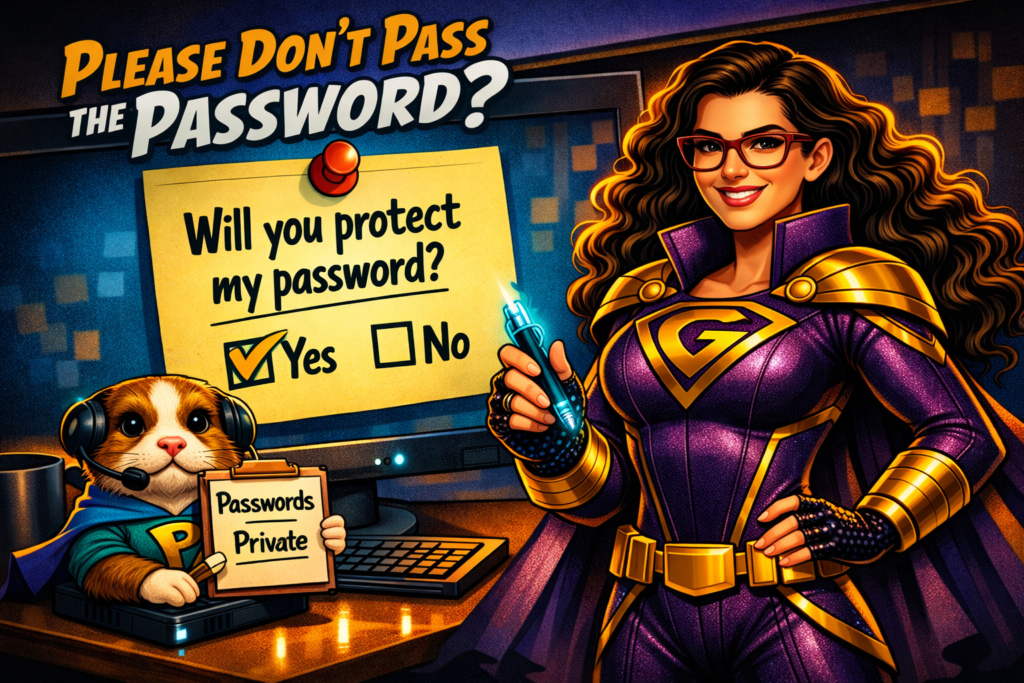
Mission Brief
Pixel and I were reviewing system logs when a troubling pattern appeared:
A user logged into their computer at 9:00 PM. They started deleting important work files. They sent angry emails to their boss’s bosses. Then — somehow — a threatening message went to the President.
Pixel dropped his tiny headset.
“G… this is villain‑level activity.”
But when I confronted the user, they looked horrified.
“That wasn’t me! I wasn’t even near my computer!”
Unfortunately, all the evidence pointed straight to their login and their email account. In the digital world, that’s as good as a signed confession.
So if it wasn’t them… who was it?
Pixel whispered, “Maybe it was Sally. You know… the coworker who got fired last week. The one they shared their passwords with.”
The Problem
Here’s the thing: There wasn’t much evidence to convict Sally.
She denied everything.
And most organizations require staff to sign paperwork promising they will not share their logins and will keep them secure.
So legally, technically, and digitally… the fault still lies with the user.
Pixel looked stunned.
“But their computer doesn’t know them from Sally. Their email doesn’t know them from Sally. Their bank doesn’t know them from Sally.”
Exactly. Your accounts make up your digital identity.
If you log into your bank, you can transfer money. If Sally logs into your bank, she can transfer money.
Your email doesn’t know the difference. Your computer doesn’t know the difference. Your systems don’t know the difference. In the cyber world, you ARE your accounts. And if someone misuses your access, YOU will be blamed.
The Rescue Plan
How to protect your digital identity:
1. Never share your passwords
Not with coworkers. Not with friends. Not with family. Not even with Pixel — and he’s very trustworthy.
2. Treat your accounts like your identity
If someone else has your password, they can impersonate you. Digitally, that’s as dangerous as handing over your driver’s license.
3. Use secure storage
If you struggle to remember passwords, use a password manager — not a sticky note, not a notebook, not a friend.
4. Understand the consequences
If someone misuses your login, all evidence points back to you. Even if you didn’t do it.
The Lesson
Your password is the key to your digital identity.
Guard it fiercely. Protect it intentionally. Never hand it out — not even once.
This is how you save the world —one tech issue at a time.