Ask Technigal: “Why can’t I install software on my machine?”
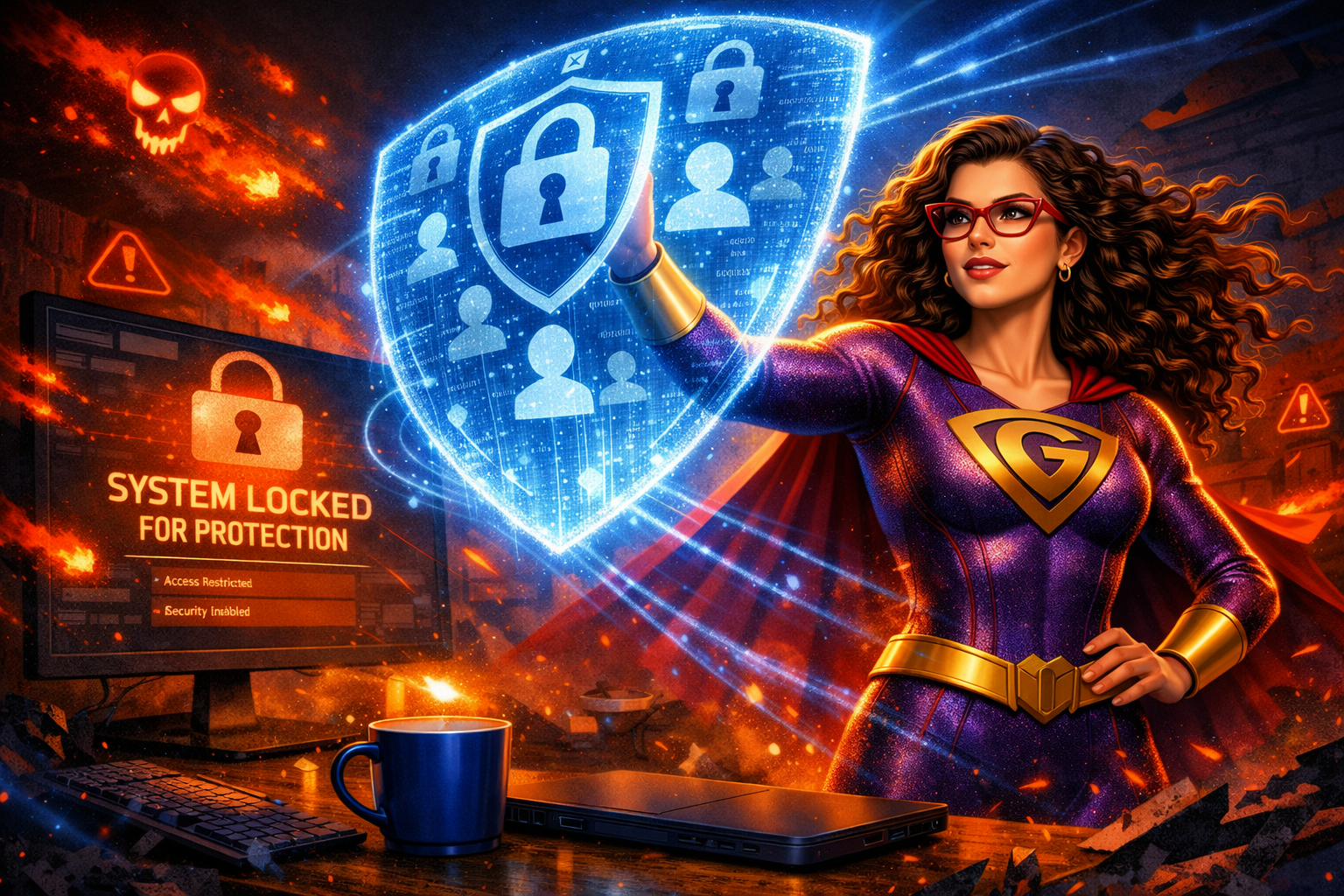
Oh, friend… I know this one frustrates people. Pixel hears this question and immediately dives behind the nearest stack of security manuals like we’re about to be hit with a flying keyboard.
Let’s talk about it — calmly, heroically, and with minimal keyboard‑throwing.
You may feel like you should be able to install whatever you want on your computer. After all, at home you probably can. But in a business environment, things work differently. And not because your tech‑heroes are power‑hungry tyrants guarding the Install Button like a dragon hoarding treasure.
It’s because security matters, and software is one of the biggest gateways for trouble.
What’s actually going on?
“Software” is just the fancy word for the programs on your machine — the apps, tools, utilities, and helpful little icons you click every day. (Hardware is the stuff you can physically touch. Pixel insists his headset counts as “hero gear.”)
Most systems use user rights to determine who can install software:
- Administrator accounts can install programs, change system settings, and customize the entire machine. This is what most people use at home.
- Limited user accounts can only customize their own profile and cannot install software.
In a business environment, you’re usually given a limited user account. That means you need your tech‑hero (hi!) whenever something needs to be installed.
It’s not a punishment. It’s protection.
Why is this important?
Tech‑heroes need to know what’s on the network — not to control you, but to keep you safe. Here’s why:
- Licensing matters.
If someone installs personal software on a work machine and the company gets audited, the entire organization could face penalties or shutdown.
- Some software hides villains.
Free downloads can contain backdoors, malware, or viruses. One wrong install can compromise sensitive data or take down a network.
- Even “good” software can cause chaos.
Programs sometimes conflict with each other, break processes, or create vulnerabilities. One innocent install can cause a week of troubleshooting.
- There may be better options.
Your tech‑hero might know of safer, cheaper, or more effective tools to accomplish your goal.
- If you can install software… so can a bad guy.
And trust me, villains don’t ask permission.
Pixel’s Note:
“If the wrong software gets installed, I have to work overtime. I don’t like overtime.”
A Final Word from TechniGal
The goal of a tech‑hero is never to control — it’s to protect. We’re always thinking about the greater good, the safety of the network, and the security of your data.
Sometimes that means saying “no,” or “not yet,” or “let me check that first.”
And yes, sometimes it means more work for us.
But that’s what heroes do.